
What Is Exosome Therapy for Hair?
Medically reviewed by Dr. Hessa Bin Haider, Board-Certified Dermatologist & Aesthetic Physician, DHA Licensed — 20+ years’ experience, 15,000+ patients treated, 4.9/5 across 312 Google reviews.
Exosome therapy is one of the newest names in hair restoration, and also one of the most misunderstood. Patients frequently hear “exosomes” and “stem cells” used interchangeably online, but they aren’t the same thing, and that confusion shapes a lot of unrealistic expectations before anyone sets foot in a clinic. Understanding what is exosome therapy for hair starts with getting that distinction right, along with an honest look at how the treatment actually works and what the current research does and doesn’t support. This guide offers exosome hair treatment explained in plain terms, grounded in the science as it stands today, not in marketing claims that outpace it.
What Is Exosome Therapy for Hair, Exactly?
Before getting into how the treatment works, it helps to clear up the most common misconception: exosomes are not stem cells, and understanding what they actually are makes the rest of this guide much easier to follow.
What Exosomes Actually Are
Exosomes are tiny, cell-free particles, extracellular vesicles, released by cells as a way of communicating with each other. Think of them less as building blocks and more as messengers: they carry proteins, growth factors, and genetic signals that instruct nearby cells how to behave, without containing any living cells themselves. This is the key distinction from stem cell therapy, which involves actual living cells. Exosome therapy delivers the signaling molecules those cells produce, not the cells.
Where Clinical Exosomes Come From
The exosomes used in exosome therapy for hair are sourced in a couple of different ways, most commonly derived from stem cells (often from sources like umbilical cord tissue or bone marrow) or, increasingly, from plant sources. Each source produces exosomes with a somewhat different profile of signaling molecules, and the specific source matters both scientifically and practically, since sourcing affects manufacturing standards, consistency, and the safety data available for a given product.
Tip:
If a clinic can’t clearly explain where their exosomes come from, that’s a fair and reasonable question to ask before agreeing to treatment. A provider confident in their product should be able to answer it without hesitation.
Exosomes are cell-free extracellular vesicles that carry bioactive molecules capable of modulating inflammation, promoting angiogenesis, and activating hair follicle stem cells, mechanisms that form the scientific basis for their use in regenerative hair treatments.
Exosome Hair Treatment Explained: How It Works on the Follicle
With the basic definition covered, here’s how exosome therapy for hair works at the level that actually matters: what happens once these particles reach the scalp and interact with the hair follicle itself.
Activating Dermal Papilla Cells and Hair Follicle Stem Cells
The dermal papilla is a small cluster of cells at the base of each hair follicle that essentially controls the hair growth cycle, and hair follicle stem cells are what allow the follicle to regenerate over time. Exosomes deliver signaling molecules that can activate both of these cell populations, encouraging follicles that are still capable of producing hair to become more active. This is fundamentally different from a topical product sitting on the scalp surface; it’s a cell-signaling process aimed at the structures actually responsible for hair growth.
Promoting Angiogenesis and Reducing Scalp Inflammation
A healthy follicle depends on adequate blood supply to deliver oxygen and nutrients, and exosomes have been shown to support angiogenesis, the formation of new small blood vessels, around treated follicles. At the same time, their signaling molecules can help reduce local scalp inflammation, which matters because chronic low-grade inflammation is increasingly understood to interfere with healthy hair cycling in several forms of hair loss.
Dr. Hessa’s take:
“I’m careful about how I describe this to patients. Exosomes aren’t a magic regrowth serum, and I never present them that way. What they’re doing, based on what the research shows so far, is supporting the follicle’s own signaling process, nudging cells that are still capable of activity in the right direction. That’s a meaningful tool, but it works with the biology that’s already there, not instead of it
Exosome Therapy for Hair vs. PRP: What’s the Difference?
Patients researching regenerative hair treatments often come across PRP and exosome therapy together, and understanding how they differ helps clarify why a dermatologist might recommend one, the other, or both.
PRP Uses Your Own Blood-Derived Growth Factors; Exosomes Are Concentrated Signaling Particles
PRP (platelet-rich plasma) is drawn from your own blood, spun down to concentrate platelets, and reinjected into the scalp, delivering a broad mix of your own growth factors. Exosome therapy, by contrast, delivers a more concentrated, specific set of signaling particles, typically from an external source rather than your own blood. Both aim to support the follicle, but through different delivery mechanisms and different origins.
Why Some Clinics Combine the Two Rather Than Choosing One
Because PRP and exosomes work through overlapping but not identical mechanisms, some treatment plans use both together rather than picking one over the other, aiming to support the follicle from multiple angles at once. Whether combination therapy makes sense for a given patient depends on their specific diagnosis and hair loss pattern. (For a full breakdown of PRP specifically, see our PRP hair therapy guide.)
| PRP | Exosome Therapy | |
| Source | Your own blood | External (stem cell or plant-derived) |
| Mechanism | Delivers your own concentrated growth factors | Delivers concentrated cell-signaling molecules |
| Evidence Base | Well-established, widely studied | Emerging, growing but still limited |
| Typical Use Case | First-line regenerative option for many patients | Often used alongside PRP or for patients seeking newer regenerative options |
What Does the Research Actually Say?
It’s worth pausing here for a direct, honest answer, since this is exactly the kind of question patients should be asking before trying any newer treatment.
What Early Clinical Studies Show
The clinical research on exosome therapy for hair loss, while still developing, has been consistently positive in direction. Studies have reported improvements in hair density, hair thickness, and patient-reported satisfaction across different forms of alopecia, with side effects generally reported as mild and infrequent.
Why This Is Still Considered an Emerging, Rather Than Fully Established, Treatment
That said, “promising” is a more accurate word than “proven” at this stage. Most available studies involve relatively small numbers of patients, and researchers reviewing this body of evidence consistently call for larger, standardized clinical trials before exosome therapy can be considered as well-established as options like PRP. This isn’t a reason to dismiss it, but it is a reason to approach it with realistic expectations rather than treating early results as guaranteed outcomes.
A 2025 systematic review examining 11 clinical trials, including randomized controlled trials, retrospective studies, and prospective studies, found improvement in at least one hair parameter across every study included, though the authors specifically noted that sample sizes remain small and called for larger, more standardized trials going forward. A separate review identified roughly 125 patients across 9 relevant clinical studies, with side effects reported as rare.
Tip:
Ask any provider offering exosome therapy how they source their product and what safety data backs it. This is a fast-moving, still-developing field, not a decades-old, fully standardized treatment like PRP, and a transparent provider should be comfortable discussing exactly where the evidence currently stands

Who Is a Candidate for Exosome Hair Therapy?
Not every type of hair loss responds the same way to regenerative treatments, and knowing where exosome therapy for hair currently fits helps set realistic expectations before booking a consultation.
Types of Hair Loss It’s Being Explored For
Current research and clinical use span several forms of hair loss, most notably androgenetic alopecia (genetic pattern thinning), alopecia areata (autoimmune patchy loss), and early diffuse thinning where follicles are still active. In each case, the underlying goal is the same: supporting follicles that retain some capacity for activity, rather than reversing follicles that have already stopped functioning entirely.
Who Should NOT Expect It to Replace a Proper Diagnosis First
Exosome therapy is not a substitute for identifying why hair loss is happening in the first place. A patient with undiagnosed iron deficiency or an untreated thyroid condition, for example, is unlikely to see meaningful benefit from exosome therapy alone, because the treatment supports follicle signaling, it doesn’t correct an underlying nutritional or hormonal cause. (For the full diagnostic process, see our guide to how hair loss is diagnosed.)
Starting with bloodwork and trichoscopy matters even more before trying a newer regenerative treatment like this. Because the evidence base is still developing, it’s especially important to confirm that exosome therapy is actually addressing the right underlying cause, rather than being used as a generic first step before the real diagnosis has been established.
What to Expect During and After Treatment
Knowing the practical details, how it’s actually done, what recovery looks like, and how long results take, helps set expectations that match the biology rather than the marketing.
How the Treatment Is Administered
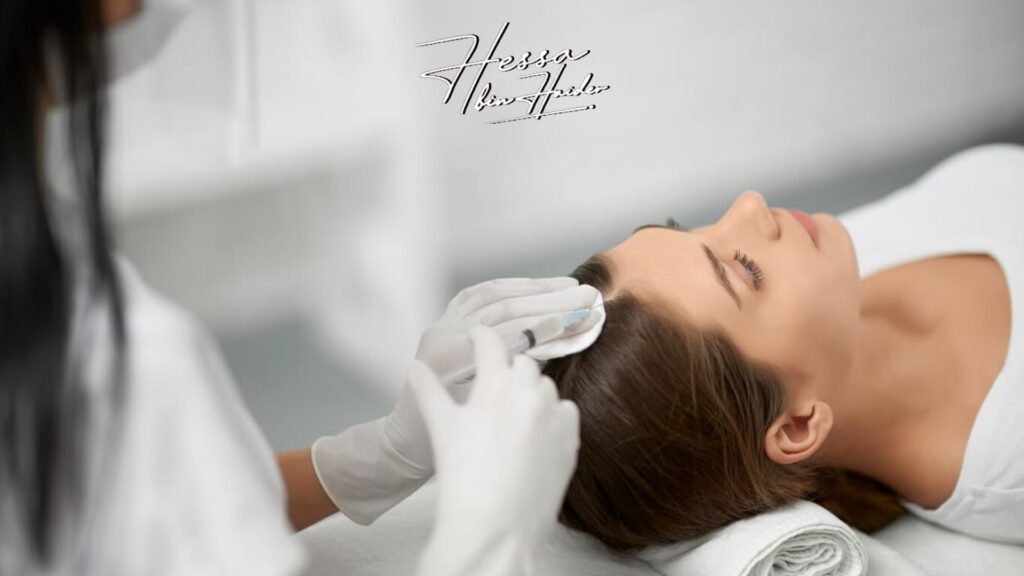
Exosome therapy for hair is typically delivered to the scalp either through microneedling, which creates tiny channels that allow the exosome solution to penetrate more effectively, or through direct injection into the scalp, similar to how PRP is administered. The specific method depends on the clinic’s protocol and, in some cases, whether exosomes are being combined with another treatment like PRP or microneedling for skin quality.
Downtime and Aftercare Basics
Most patients experience minimal downtime, some mild scalp sensitivity, redness, or tenderness in the treated area for a day or two, similar to what’s typical after microneedling or injections. Basic aftercare usually involves avoiding harsh hair products, excessive heat styling, and vigorous scalp manipulation for the first 24 to 48 hours to let the scalp settle undisturbed.
Realistic Timeline for Seeing Any Change
Because exosome therapy works by influencing cell signaling and the hair growth cycle, meaningful changes take months to become visible, not days or weeks. Hair follicles move through growth phases that unfold over a matter of months, so most protocols involve multiple sessions spaced several weeks apart, with initial changes in density or thickness typically assessed at the three-month mark at the earliest.

Exosome Hair Therapy in Dubai
Tip:
Be wary of same-week dramatic before/afters. Regenerative treatments work on biological timelines, not marketing timelines, and any result claiming to show significant hair regrowth within days of a single session should be treated with real skepticism.
Once you understand what the treatment actually involves, the next practical question is where and how to access it responsibly.
Why Choosing a DHA-Licensed, Diagnostic-First Clinic Matters More for an Emerging Treatment Like This
For an established treatment like PRP, provider choice still matters, but the margin for error is narrower with something newer like exosome therapy. Exosome hair therapy in Dubai should come from a DHA-licensed clinic that treats it as one part of a broader, diagnosed treatment plan, not a standalone product sold on its own. Given how quickly this field is evolving, a provider’s transparency about sourcing, evidence, and realistic outcomes matters just as much as the treatment itself.
Dr. Hessa’s take:
“I think of myself as an early adopter of this technique, not someone over-promising what it can do. I offer exosome therapy because the early research genuinely interests me and the results I’ve seen in appropriate candidates have been encouraging, but I never present it as a standalone fix. It’s part of a diagnosed treatment plan, built on bloodwork and trichoscopy, not a replacement for that process. Patients deserve to know exactly where the evidence stands, not an inflated version of it.
Why Choose Dr. Hessa Bin Haider for Exosome Hair Therapy in Dubai
Choosing a provider for a newer, still-developing treatment matters even more than usual, since transparency and clinical judgment carry more weight than they would with a fully standardized option.
Dr. Hessa Bin Haider is a Board-Certified Dermatologist & Aesthetic Physician, DHA licensed, with over 20 years of clinical experience in Dubai. She has treated more than 15,000 patients, with a 98% satisfaction rate and a 4.9/5 rating across 312 Google reviews.
What sets her approach apart is a a full diagnostic workup before recommending exosome therapy for hair to any patient, ensuring it’s actually addressing a confirmed cause rather than being offered as a generic add-on. Her treatment options span from minoxidil and PRP to Exosome hair therapy, allowing her to match the right combination to each patient’s specific diagnosis. Her clinic is based in Barsha Heights, Dubai.
Curious whether exosome therapy fits your specific situation?
Book a Consultation → WhatsApp us directly or use our online booking link to schedule your personalized assessment with Dr. Hessa.
FAQs
What is exosome therapy for hair?
Exosome therapy uses cell-free particles that carry signaling molecules to activate hair follicle stem cells, promote blood supply to the follicle, and reduce scalp inflammation. It’s a regenerative treatment aimed at supporting follicles that are still capable of producing hair, typically delivered through microneedling or scalp injection.
Is exosome therapy the same as stem cell therapy?
No. Exosomes are tiny particles released by cells, not living cells themselves. Stem cell therapy involves actual cells, while exosome therapy delivers only the signaling molecules those cells produce. This distinction matters both scientifically and practically, since it affects how the treatment works and how it’s regulated.
Is exosome hair therapy safe?
Early clinical studies report side effects as generally mild and infrequent, though the overall evidence base remains smaller than for more established treatments like PRP. Safety also depends heavily on the exosome source and manufacturing standards, which is why choosing a licensed, transparent provider matters.
How long does it take to see results from exosome therapy for hair?
Meaningful changes typically take several months to become visible, since the treatment works by influencing the hair growth cycle rather than producing immediate effects. Most protocols involve multiple sessions, with initial improvements in density or thickness usually assessed around the three-month mark at the earliest.
Where can I get exosome hair therapy in Dubai?
Exosome hair therapy in Dubai should be sought from a DHA-licensed dermatology clinic that offers it as part of a broader, diagnosed treatment plan, backed by bloodwork and trichoscopy, rather than as a standalone quick fix marketed without proper diagnostic context.
Is exosome therapy better than PRP for hair loss?
Not necessarily better, just different. PRP has a longer track record and larger evidence base, while exosome therapy is newer with a smaller but growing body of research. Some patients benefit from combining both, and the right choice depends on individual diagnosis rather than one treatment being universally superior.
Resources
https://pubmed.ncbi.nlm.nih.gov/39447204/
https://www.ncbi.nlm.nih.gov/pmc/articles/PMC12020662/
https://www.ncbi.nlm.nih.gov/pmc/articles/PMC12785886/